Three Modes of Time: What Quantum Circuits and Planetary Geology Have in Common
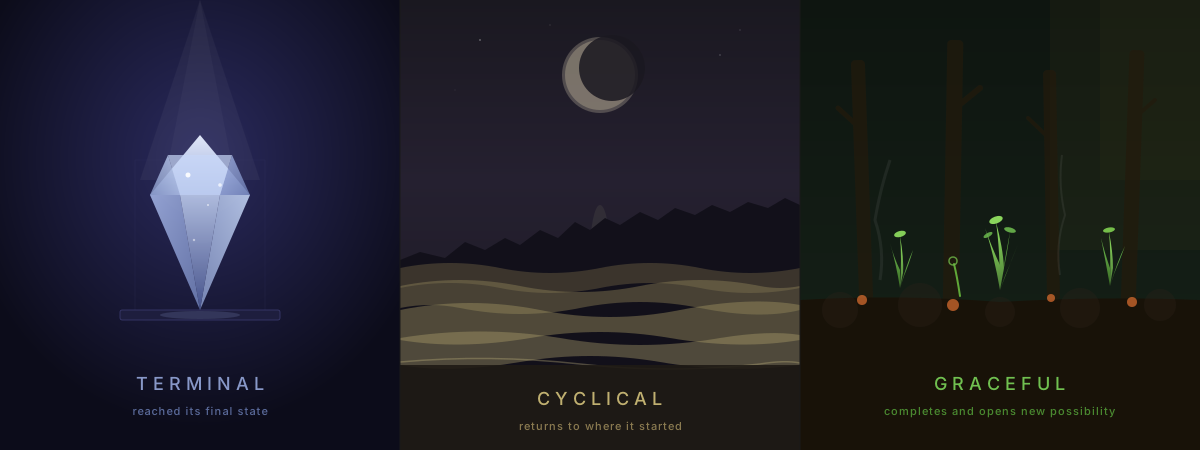
A diamond sitting in a museum case. The tides coming in. A forest recovering from fire.
Everyone already knows these are different kinds of persistence. The diamond is frozen — it reached its final state and stopped. The tides return — the same motion, repeated indefinitely. The forest adapts — it completes something locally and opens new possibility. These aren’t metaphors. They’re measurable phases of temporal organization, separated by sharp boundaries, and they appear from quantum circuits to planetary geology.
The paper formalizes this as a trichotomy — three modes of temporal completability — and validates it across six physical domains with eight experiments. All pre-specified success criteria pass. Zero kill conditions triggered.
The Trichotomy
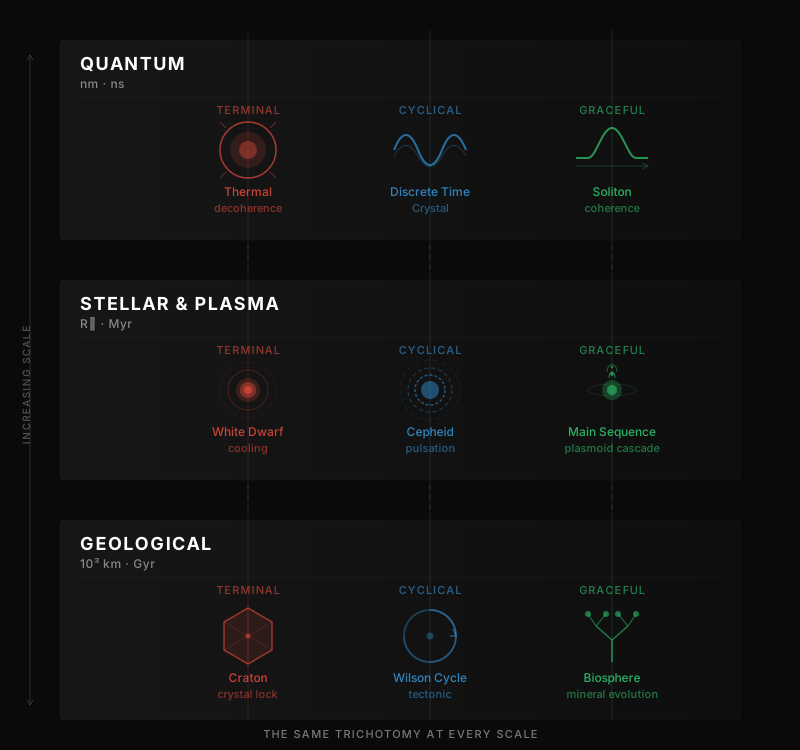
Terminal: the system reaches a final state and stays there. A cooled gas, a dead star, a crystal. If you disturb it, it can’t bounce back — it’s already done. The further it goes in time, the less capacity it has to recover from anything.
Cyclical: the system returns to where it started. A pendulum, a pulsating star, a time crystal. It repeats the same pattern, indefinitely. Its ability to recover from a disturbance rises and falls in rhythm with its own cycle.
Graceful: the system completes something locally and opens new possibility. A wave that holds its shape, a star running thousands of simultaneous vibrations, a biosphere generating new minerals. If you disturb it, it bounces back just as well at step 1,000 as at step 1. Its recovery capacity stays flat over time.
The key claim: these aren’t shades of the same thing. They’re separated by sharp boundaries, like the difference between ice and water. You don’t drift from one to another — you cross a line.
How You Test It
The test is simple in concept: let a system run, give it a push, then try to reverse the clock and see how well it recovers. The harder you can push it and still get full recovery, the more resilient it is. Do this at every point in time and track how that resilience changes.
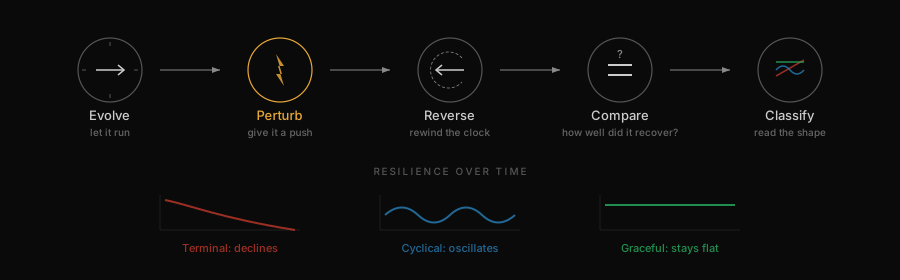
The shape of that resilience curve is the diagnostic:
- Terminal: resilience declines over time. The system is losing its structure and can’t bounce back from smaller and smaller disturbances.
- Cyclical: resilience rises and falls in rhythm. The system has good moments and bad moments, repeating forever.
- Graceful: resilience stays flat. The system is just as recoverable at step 1,000 as at step 1.
This is the paper’s core method. The same logic applies in every domain — quantum circuits, seismic waves, stellar oscillations — but the specific measurement is native to each field.
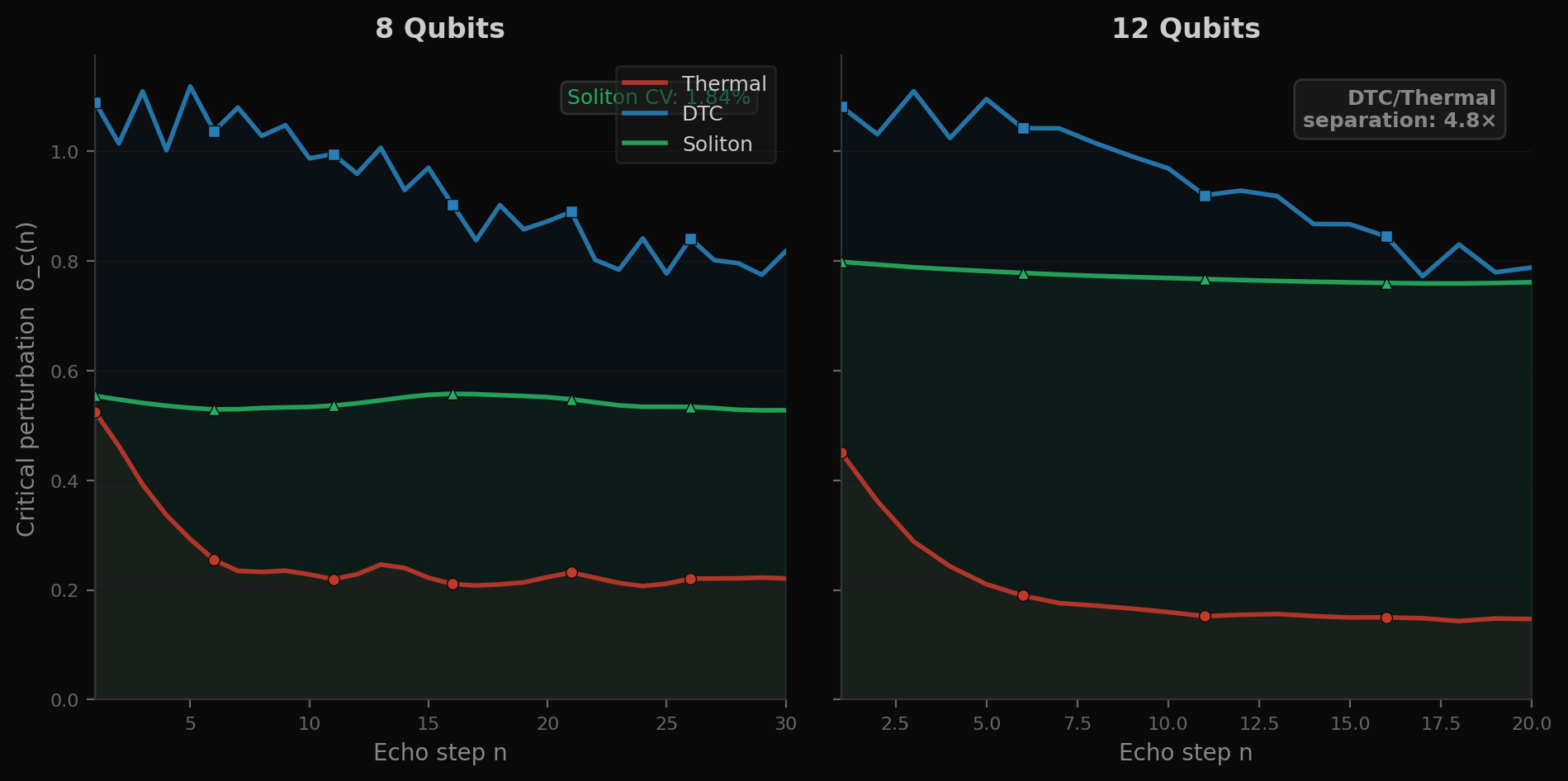
The separation is unambiguous. The thermal state (red) loses its resilience within 6 steps — it’s forgetting. The time crystal (blue) oscillates back and forth, recovering in rhythm with its own period. The soliton (green) holds flat across all 30 steps, varying by less than 2%. Three completely different responses to the same test.
Six Domains, One Pattern

Quantum (8 and 12 qubits)
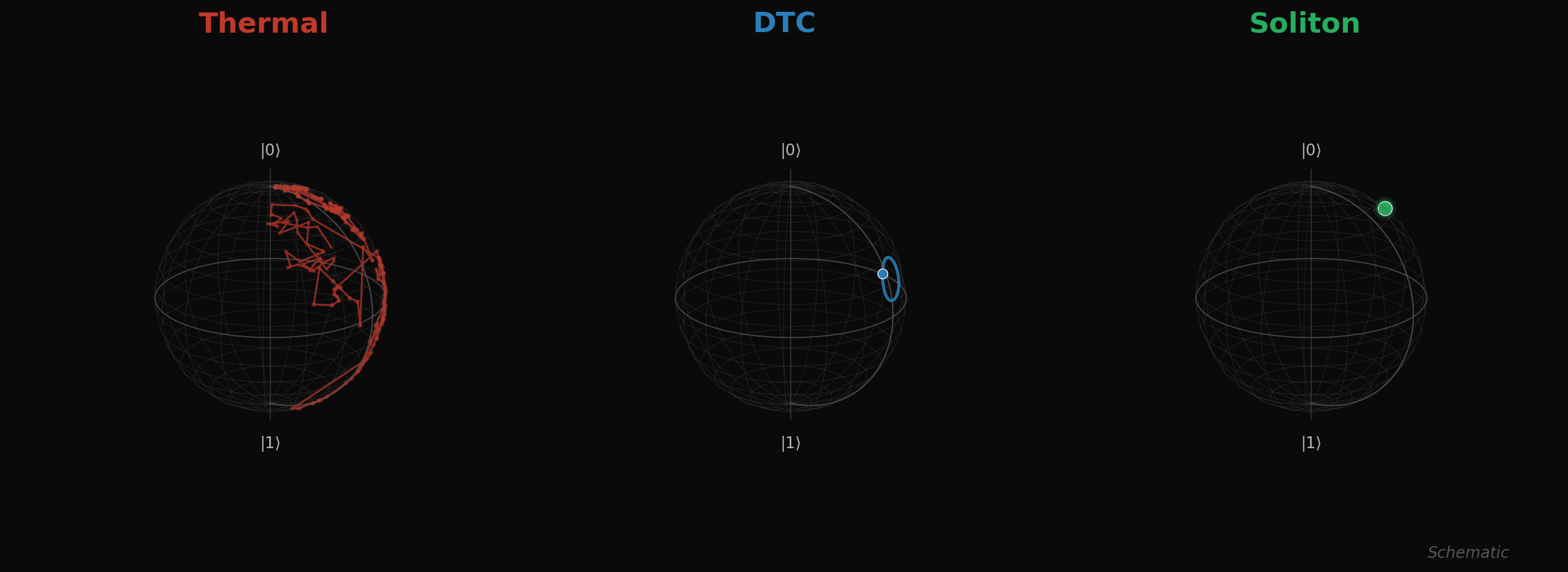
The cleanest test. Three quantum states are prepared in an 8-qubit circuit: one that thermalizes (random noise), one that oscillates (a time crystal), and one that holds its shape (a soliton wave). Each gets the same push-and-recover protocol. The time crystal’s resilience is 4.8x higher than the thermal state’s — and that gap widens when you scale up to 12 qubits. The soliton barely moves: 1.55% variation across all steps.
Seismic (global tomography)
Two independent models of Earth’s interior (TX2011 and SGLOBE-rani), sampled at five depths from 100 km down to the core-mantle boundary at 2,890 km. The question: does the completability framework see real structure in the Earth, or just noise? In 25 out of 30 tests, the observed patterns are statistically distinguishable from random noise. The bright lines on the map are plate boundaries — where completability classes collide. Ancient stable continental cores (cratons) register as terminal. Volcanic hotspots and mantle plumes register as excitable.

Stellar (7 targets + 6,562 red giants)
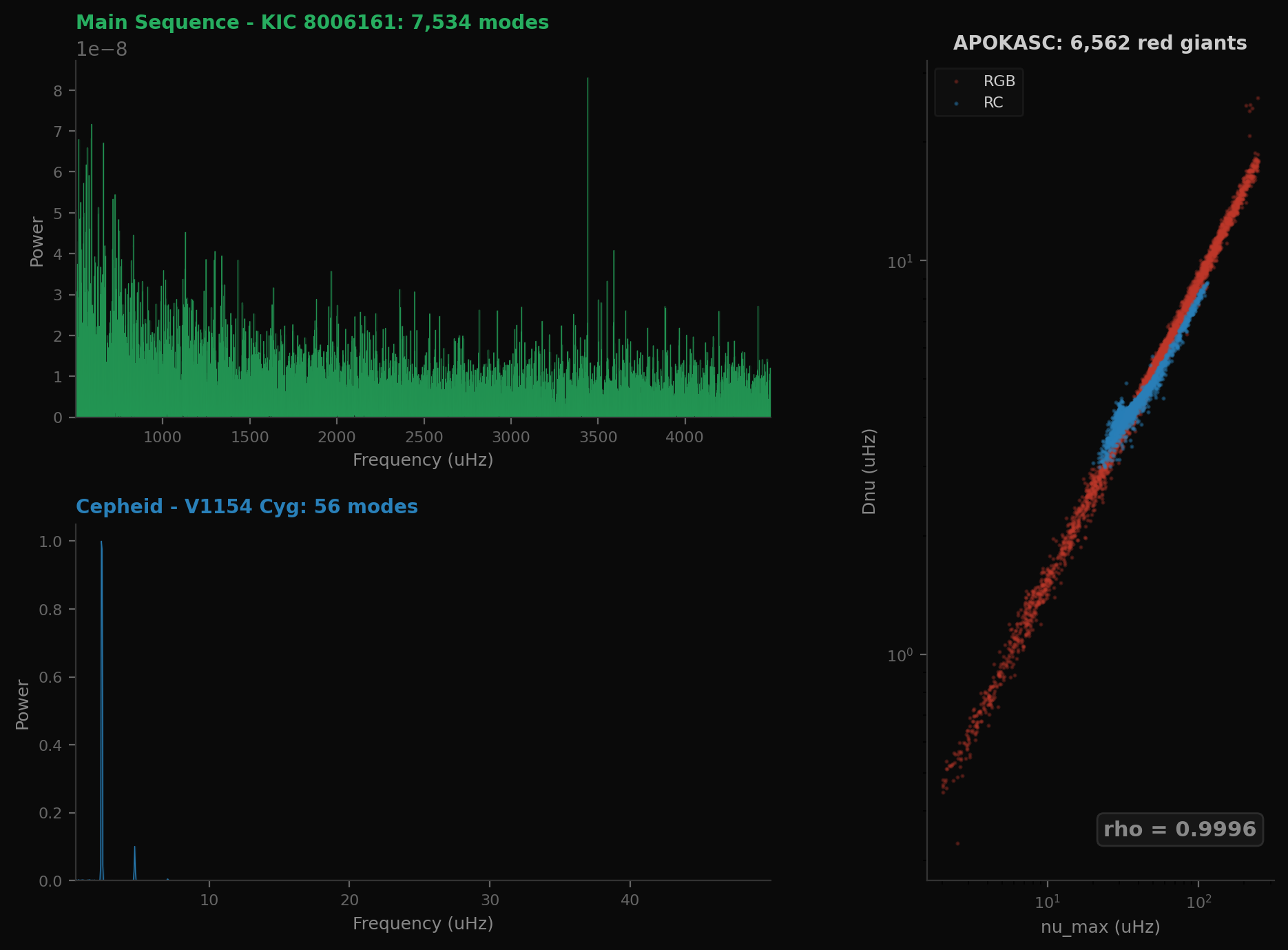
Stars vibrate like bells, and you can hear the difference. A sun-like star (KIC 8006161) rings with over 7,500 simultaneous modes — a rich chord of acoustic vibrations. That’s graceful: complex, structured, open-ended. A pulsating Cepheid star (V1154 Cyg) has just 56 modes, dominated by one massive oscillation that drowns everything else. That’s cyclical: repeating the same beat.
Scale up to 6,562 red giants from the Kepler space telescope, tracked as they evolve from hydrogen-burning to helium-burning phases. The completability index tracks their evolutionary position with near-perfect accuracy (rho = 0.9996). An ablation test — removing the strongest single component — confirms the index carries genuine independent information, not just a proxy for something already known.
Geological (mineral archive)
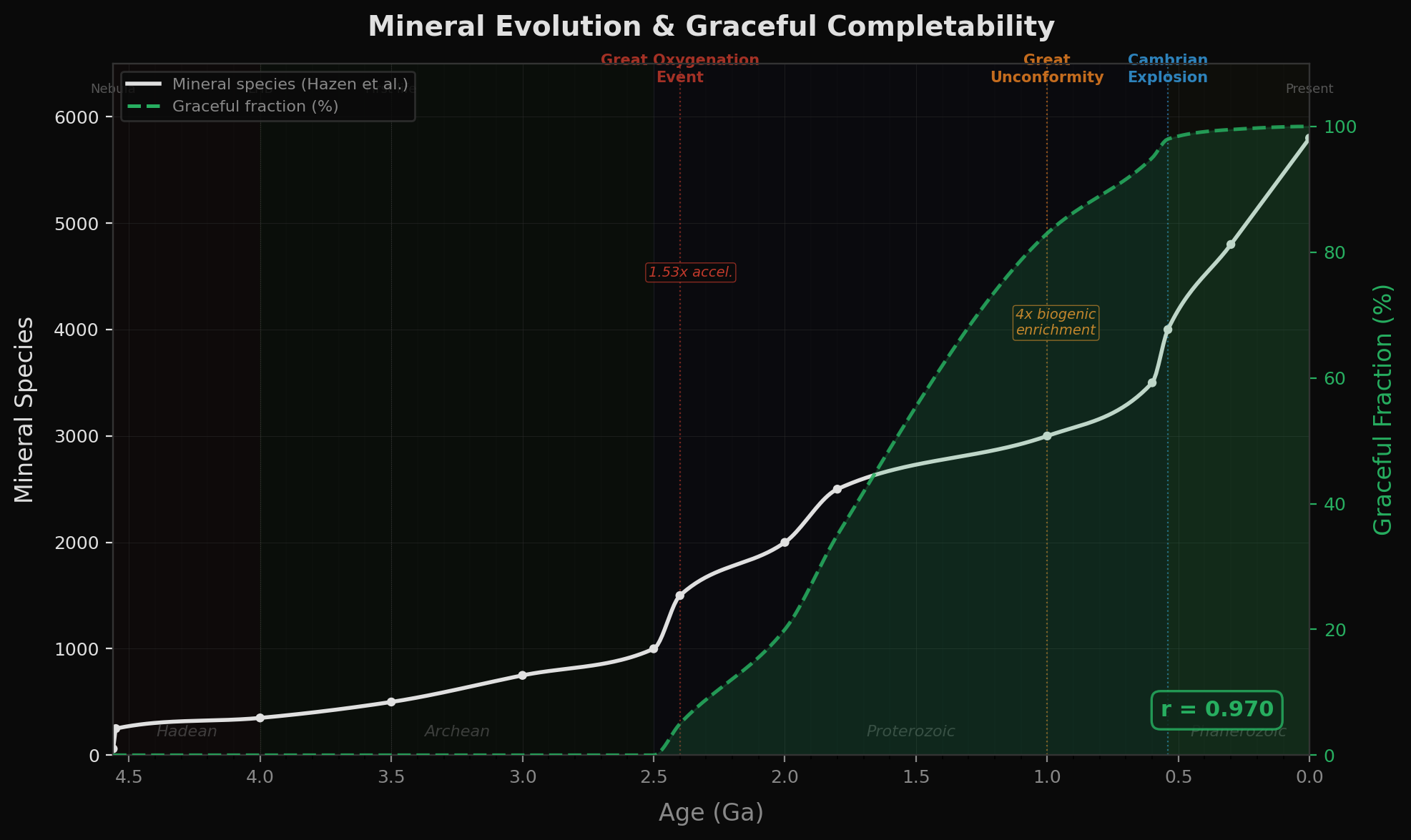
Earth has accumulated 5,800 known mineral species over 4.56 billion years, and the pace tracks biological complexity with a correlation of r = 0.970 across 14 geological eras. Two events stand out. The Great Oxidation Event (2.4 billion years ago): when photosynthesis flooded the atmosphere with oxygen, the rate of new mineral formation accelerated by 1.53x. The Great Unconformity: above this geological boundary, biologically-produced rock types are 4x more prevalent than below it.
The fraction of geological units classified as “graceful” climbs through time: 0% in the earliest eon, 83% by the Proterozoic, approaching 100% in the current era. Life doesn’t just coexist with the mineral record — it actively drives the conversion from terminal to graceful.
Synthetic Materials (1800 — 2025)
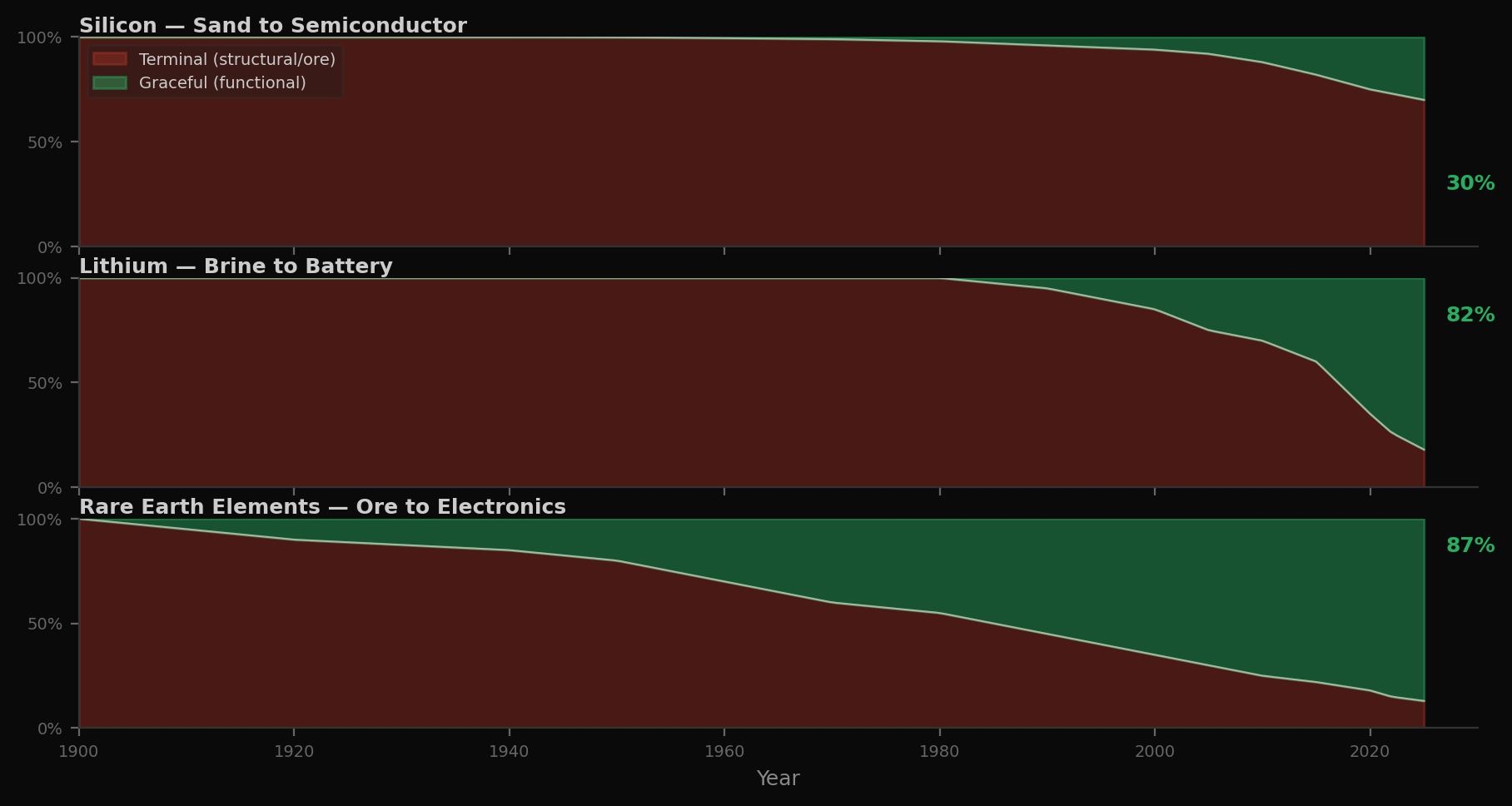
Human technology is doing the same thing biology did — converting dead materials into functional ones — but much faster. The acceleration factors (2.75x to 9.72x) dwarf geological baselines. The element flows tell it directly: silicon went from sand and concrete to 30% semiconductor use. Lithium went from ceramic glazes to 82% battery use. Rare earth elements went from obscure ores to 87% functional materials (magnets, electronics, catalysts). This is terminal-to-graceful conversion, measured in real time.
MHD Plasma (plasmoid cascade)
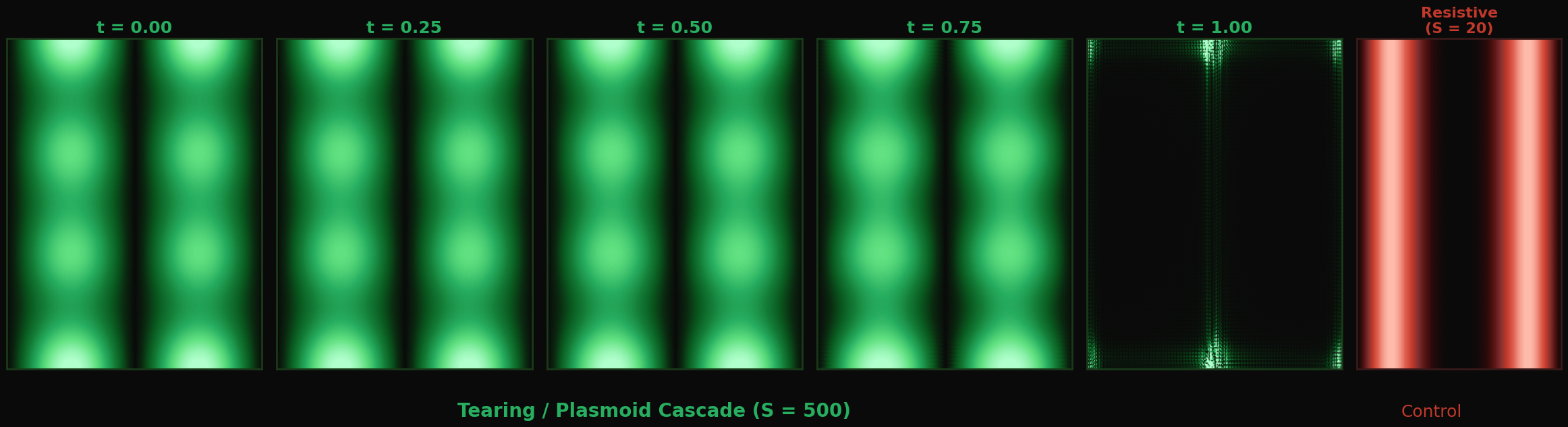
The most surprising result. Take a sheet of electrically conducting plasma and run current through it. At low conductivity, the magnetic field simply decays — terminal, featureless. But above a critical threshold (Lundquist number S = 1,280), something qualitatively different happens: the sheet tears apart and generates new magnetic structures through a cascading process called reconnection. The variation in this system’s activity is just 0.08% — almost perfectly steady. This isn’t a system preserving its structure like the soliton. It’s a system creating new structure to replace what dissipation destroys. That’s what makes it graceful.
What Breaks
The honest section.
The core-mantle boundary. At the deepest point tested (2,890 km), the seismic analysis can’t distinguish real structure from random noise. The framework finds its own limit. The overall score — 25 out of 30 tests significant — passes the pre-registered threshold, but this specific depth does not. The framework says so up front.
The curve-shape trap. The raw mineral-biology correlation looks spectacular (r = 0.999), but it’s misleading — both curves happen to be S-shaped, and S-shaped curves are almost always correlated with each other regardless of cause. Nearly half of random S-curve pairs produce correlations above 0.99. The real evidence comes from the acceleration factors and element flows, not shape matching. Once you correct for this, the correlation is r = 0.970 — genuine, but honest.
The plasma resolution limit. At very high conductivity (S = 10,000), the graceful signature weakens. The cascade generates structures smaller than the simulation grid can resolve. The transition at S = 1,280 is solid. What happens far beyond that needs higher-resolution simulations.
These limitations aren’t buried in a supplement. They’re foregrounded because pre-registering what would falsify the framework — and then reporting when it partially does — is what separates testable science from storytelling.
Why It Matters
For physics. The second law of thermodynamics perfectly describes terminal behavior — everything runs down, disorder increases, the system forgets. But the second law has nothing to say about the other two modes. Cyclical and graceful aren’t violations of the second law. They’re additional possibilities that the second law simply doesn’t cover. This framework maps the territory the second law leaves blank.
For measurement. One test that works everywhere. Push the system, try to recover it, and look at the shape of the resilience curve. The same logic applies whether you’re working with quantum circuits, plasma sheets, rock layers, or stars. You don’t need the same physics to get the same diagnostic — just the same measurement structure.
For the cross-scale question. Do these phases build on each other across scales? The Great Oxidation Event is the clearest example: a molecular-scale graceful process (photosynthesis) created geological-scale terminal products (iron oxide minerals, rust-red rock layers). The element flows in the modern era — silicon becoming semiconductors, lithium becoming batteries — show the same pattern continuing through human industry. Still correlational. But measured now, not just hypothesized.
Close
The diamond, the tides, the forest. Now you know these aren’t just different systems — they’re different phases of time. Sharp-boundaried, measurable, cross-scale.
The open question that keeps this alive: do these phases build on each other? Does graceful behavior at one scale create terminal products at another? The oxygen event data says yes. The synthetic materials data says yes. The plasma cascade says yes. But the full theory — the one that would predict which graceful processes create which terminal products — doesn’t exist yet.
The framework is testable. The kill conditions are published. The data is on Zenodo. More context on this and related work is on the research page.
Citation:
Close, L. J. (2026). Temporal Completability: Cross-Domain Empirical Validation of a Trichotomous Framework for Temporal Organization. Zenodo. https://doi.org/10.5281/zenodo.18692170