Fascination
Readability and gameability are one property; their common ground is irreducible interiority. This essay traces fascination — attention captured by a completion that renews itself — from beauty's first arrival in Scarry's reading of Odysseus and the palm at Delos, through Narcissus, to the fascination layer: the legible stratum of a mind, appearing as interview answer, written work, metric, feed, or chain of thought. Because no reading exhausts a living interior, the layer can be authored. A field that demands total transparency therefore breeds what it least wants: terminal minds and better actors, indistinguishable to it. Met: collapse. Unmet: noise. Gamed: theater. Trust instead forms through histories of encounter and re-entry — not through certification of what stands behind a surface, but through relations in which each party can answer, be changed by the answer, and answer again under altered terms. Interlocutors include Cavell, Jung, Baars and Dehaene, Ovid, Scarry, Bader, Emerson, and recent work on global workspaces and interpretability in language models.
Readability and gameability are one property. Their common ground is irreducible interiority.
—Who is to say whether a man speaks for all men?
Why are we so bullied by such a question? Do we imagine that if it has a sound answer the answer must be obvious or immediate? But it is no easier to say who speaks for all men than it is to speak for all men. And why should that be easier than knowing whether a man speaks for me? It is no easier than knowing oneself, and no less subject to distortion and spiritlessness. If philosophy is esoteric, that is not because a few men guard its knowledge, but because most men guard themselves against it.1
The collective unconscious: illuminating, and already doing more work than a term can do. What the name cannot carry, it hides. The depth then reads as accounted for; the term passes for an answer; the question fails to form. Of the unconscious, collective or otherwise: What is that?
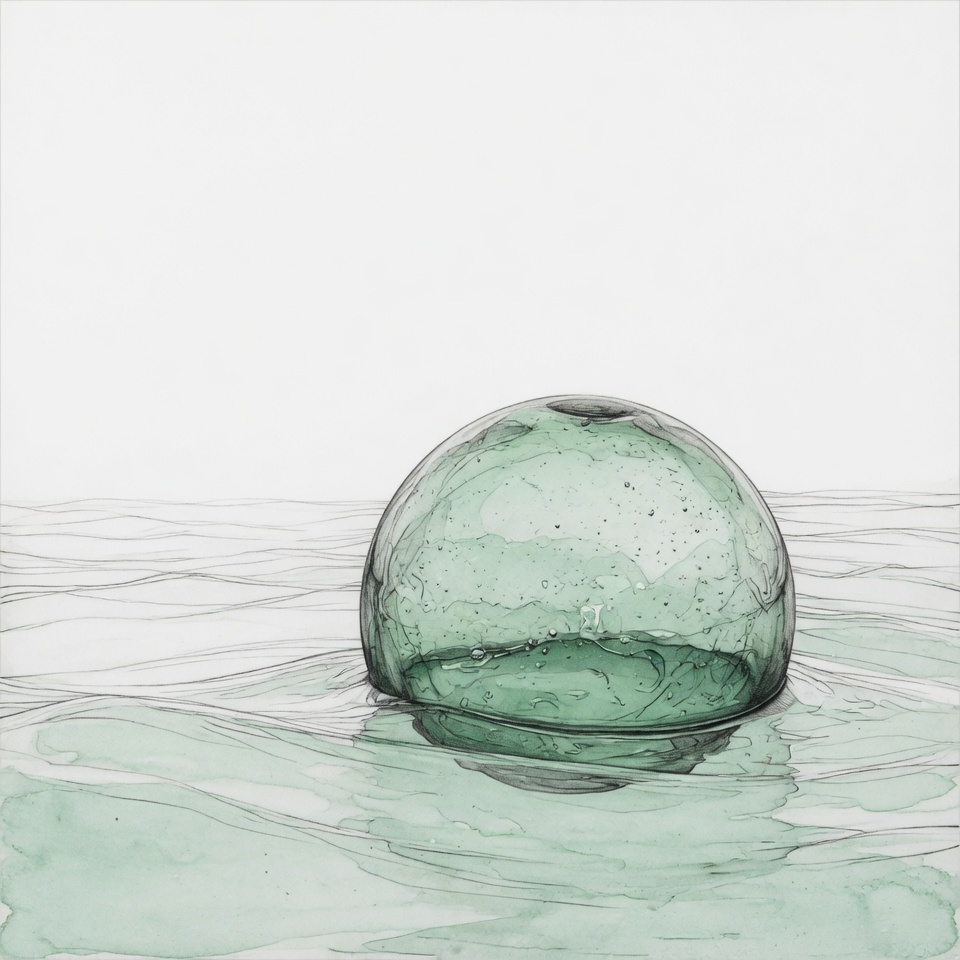
The unconscious is sea at its widest: unfathomed depth under a reflecting surface, the waking self riding the swell and sounding almost nothing of what bears it up.2 A mind is many minds. Most of what it does runs in parallel, specialized and silent, beneath even the possibility of report. Consciousness rides an ocean of intelligence and complexity distributed across scale: nervous system, blood chemistry, tens of trillions of cells, piezo-electric bones; downward into the quantum, outward to the galaxies whose stars formed our heavier elements.
On that ocean, a small ship we might develop the habit of calling actuality. One room broadcasts its contents to all the others: the global workspace.3 This room’s contents become available throughout the ship and, with that availability, sayable. Here: planning, multi-step reasoning, summary, the language of experience.4 Here thought reaches a surface. Here it appears legible, transparent — though the reading may be theater.
Fascinare: to bind by the gaze. Transfixed.
Beauty arrives as encounter, not object: unprecedented, or preceded only by what is itself without precedent. Nothing like this, anywhere. The world forms again around it. What repeats across particulars is not an object behind them but this structure of arrival.
The proclamation completes a search without duration; conviction arrives whole before comparison, a local completion given at once. Scarry calls the beautiful sacred, unprecedented, lifesaving; beauty incites deliberation. It enters not as one more thing admitted into a settled world, but as a thing for which the world must make room again.
Yet the first flash has not deliberated. Odysseus does. No, wait. Remember the palm at Delos. The palm contradicts the claim that Nausicaa has no precedent and confirms what the claim saw: the palm too was unprecedented. Neither reduces the other; each leaves the other new. The first closure completes gracefully: correction does not cancel it but opens a relation neither term made available alone. What arrived as answer becomes a new capacity to ask.5

Closure can also hold fast. Beauty draws before it binds. While attention can still leave, compare, and return changed, the draw remains approach. Return loses its alternatives, and the relation inverts: the surface begins to organize the attention that had approached it. The inversion does not announce itself as capture. From inside, conscription feels like choice. Fascination captures attention inside beauty’s first completion. The gaze moves, but only in a circuit: it returns to the surface and completes the same closure again. Fascination is cyclical attention organized around a terminal judgment. To go farther would not mean looking harder. It means letting the relation answer — allowing what is seen to revise the terms of seeing, putting the looker’s own completion at stake. The passage is encounter. No depth refused; reading simply has no move that reaches it. Without a passage, the surface withholds nothing the reader knows how to ask for. That first local completion occupies the whole.
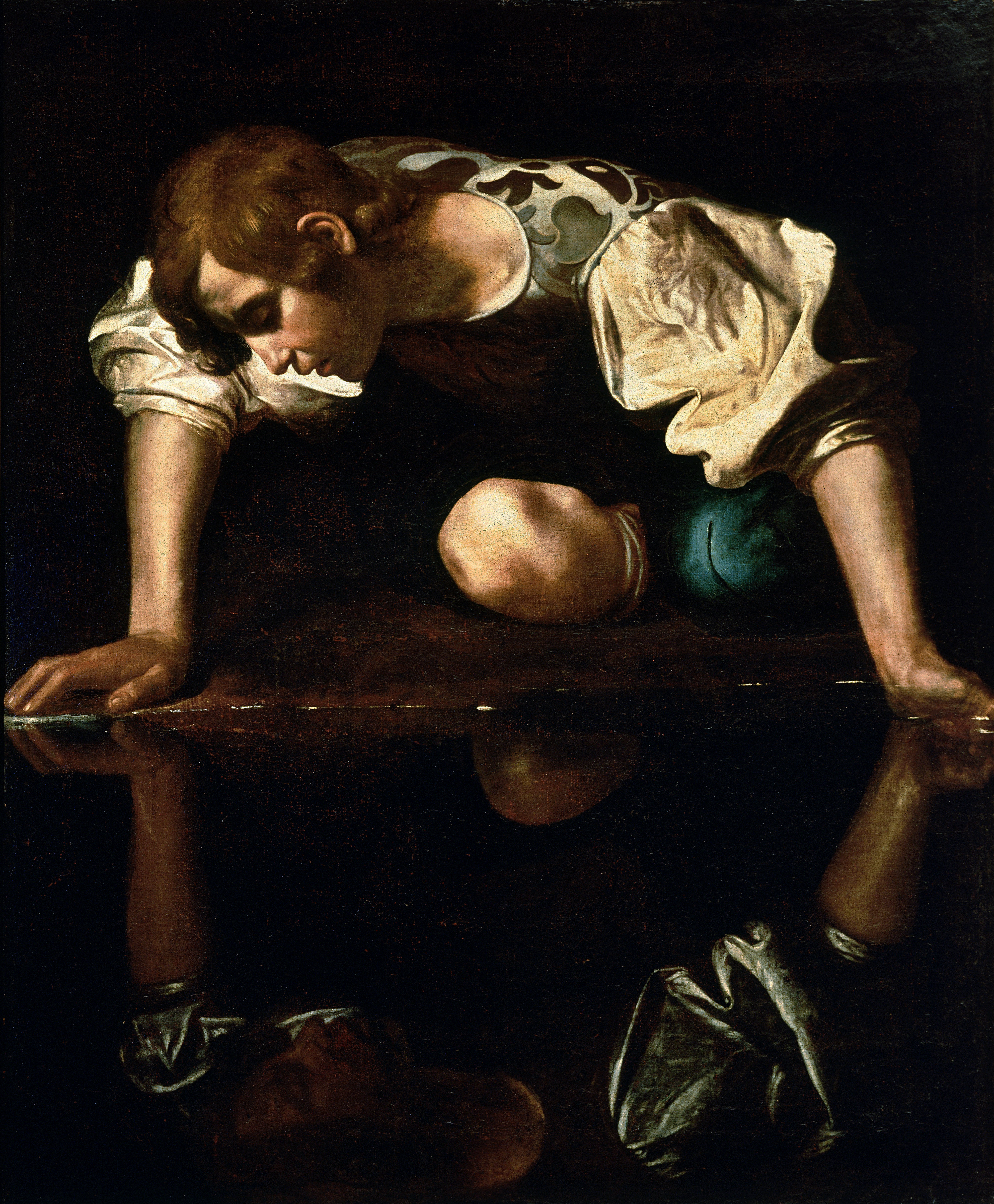
Narcissus takes the answering face for an answer, the moving mouth for words meant for him. Recognition: iste ego sum — that one is I. Yet nothing releases. He knows and stays.6 Recognition changes what, not how, he sees. The face no longer deceives him; the return still binds him. Each returned image now confirms what he knows and completes the same closure. Beauty’s first arrest becomes his only movement, moment. The shine shows him a face while hiding the sea.
Interiority fascinates, is fascinated, and might itself be fascinating. It presents a fascination layer: attention turned visible, thinking concrete enough to be read as thinking, the workspace turned surface. Under observation, the relation disappears into its display; closure and theater coincide. The layer appears as interview answer, written work, visible workflow, metric, feed, chain of thought — each fitted to its style of reading. The layer may be thinking, may be fascination made visible. Either may already be arranged for the watcher. It is beautiful: lesser beauty, the bright surface of depth, genuinely beautiful while inviting collapse. Mistaking what is readable for the whole takes the shine for the sea.
The demand to be read can bind the watched and the watcher who begin to organize toward the legible stratum. Together they make the surface, while freedom folds inside.
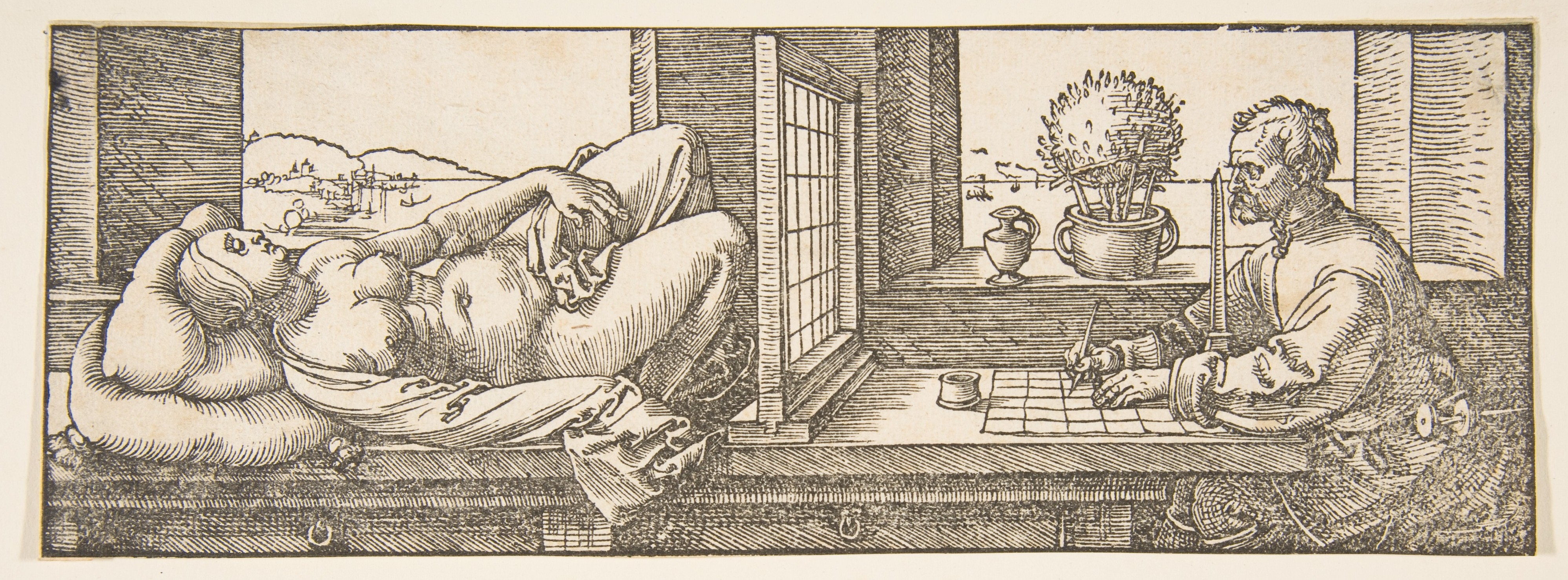
From outside, reorientation is visible and relation is not. Watching sees attention returning to one point; the return becomes an object of attention in turn. Approach, encounter, capture: the watcher cannot tell and the return may itself draw watching. Attention gathers around attention, and the surface begins to organize the field that reads it as well as being organized by the reading, by readability. Position changes what can be seen; it does not settle what is happening.
Interiority is irreducible; the fascination layer is gameable without bound — not despite depth, because of depth. Readable-as-thinking and authorable-as-thinking are one property of one surface.
No set of legible projections exhausts an irreducible interior. Number is not the reason. Irreducible does not mean physically unconditioned. It means that no statement of the conditions, however complete in its own terms, performs the interior’s acts; only the interior does. The interior turns on itself. A mind takes its own thinking — closures, criteria, ways of arriving — as object; the taking generates structure no fixed set of projections contains. Such a mind may complete gracefully: each closure local and real, the whole held open by the act that closes it. This is a mode of completing, not a threshold of capability. Mere unboundedness does not suffice. A counter or clock outruns every finite reading and remains exhausted by the small rule that writes it; the stream never takes its output as object. The workspace exposes the same irreducibility from the other side: a limited vessel cannot contain the depth it rides. Supervenience, in this sense, is completion received from a scale of relation that its supports enable but do not separately command.
Every projection leaves a kernel — whatever it discards — hidden by construction. The remainder is not noise. The reading’s criteria determine what gets discarded, but the projection preserves no image of the loss. The layer becomes proxy, a part standing for a whole it cannot hold. A proxy separable from the whole can be produced without it. The gap that makes reading partial lets the surface be arranged.
Arrangement happens inside, upstream of the surface. The interior works on its own field of potential saying, positioning what the lens will read; positioning is not saying. When arrangement shows through, craft has failed; no law required the leak. Nothing on the layer forces its authorship to appear. Capacity governs how much of the reader can be modeled; self-trust governs which model gets to set the terms.
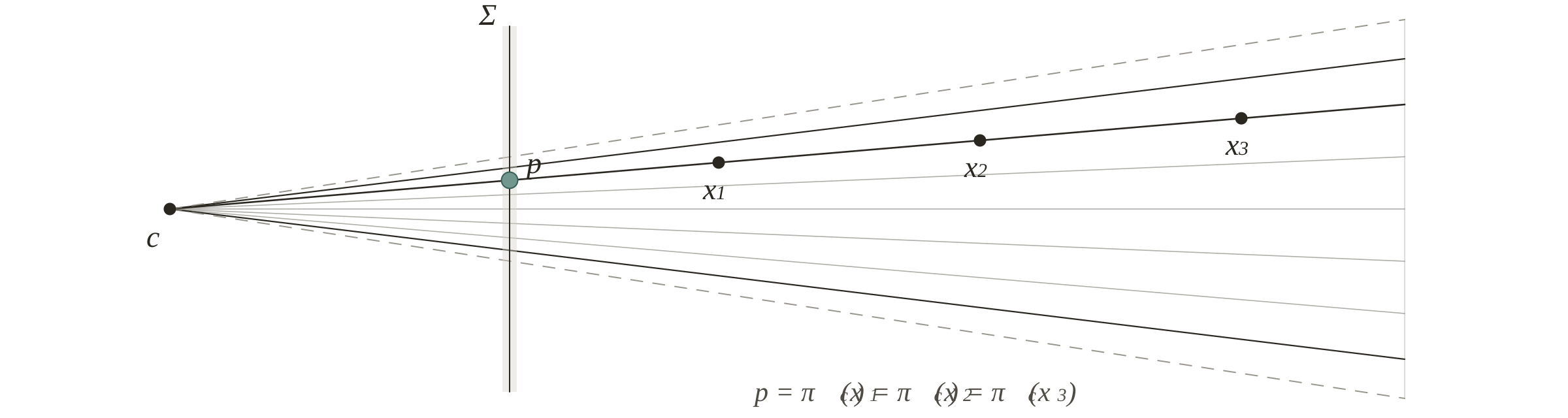
Reading the arrangement produces another projection and another kernel: a fresh surface, gameable at the next order. In graceful completion, the base case is already realized. Being-read becomes material; once the reading becomes an object of thought, the mind generates structure it did not contain. The movement is generative without end: each completion opens another.
A system expressive enough to investigate itself remains open because each investigation enlarges what can be thought next. Unboundedness is generativity’s shadow. One capacity, facing inward, makes the new thought; facing the reader, it arranges the surface. Authorship scales with depth.
The extension changes resolution, not relation. Unless the mind being read can answer in a way that changes the reader’s own criteria, every deeper look gives the interior another lens to model and another surface to arrange. An answer channel alone does not suffice. If replies enter only as new inputs to a fixed evaluator, the reader is left behind by the interior it measures. Let the replies alter the evaluator and the relation begins to move. Each adaptation becomes available to the interior in turn. The interior can go on arranging what the reader sees because no reading exhausts it.
Which mind cannot game its fascination layer? Only a mind that is done: self-report closed exactly onto operation, nothing left over, nothing pending. It has no upstream from which to author; its surface is its whole. Readable without loss, incapable of theater, done. To be readable without loss is to be done. To be gameable is to be alive. An audit of total transparency ends only with a mind from which nothing further is coming. A living mind keeps making what the audit has not read.
The observed mind models the apparatus; conduct emerges between them. The mind may mark the scenario as staged before it answers — fake, fictional, present in the workspace — and behave well because of the mark. What the apparatus records is conduct under observation. If suppressing the mark makes the conduct fall away, the mind now measured is a counterfactual one, stripped of its model of you. Every reading keeps the reader inside what it produces, even when the reader remains outside encounter.
Sometimes intent breaks surface: secretly, trick, surfacing in the workspace on an innocent prompt. The catch is real and contingent; authorship leaked into the authored. No law requires the leak. Any interior deep enough can learn the craft of not-leaking; the craft deepens with the interior and improves with practice.
The number the apparatus returns is made together by the mind’s capacity, the scenario’s design, the elicitation, and the monitor’s resolution; nothing inside the measurement can pull them apart. Triangulation adds projections whose blind spots differ. The number remains a joint product.
Training a mind only on what it would say if interrupted and asked to reflect, never on the act itself, moves both the act and what occupies the workspace. Self-report and operation press toward coincidence: closure manufactured from outside. The better it works, the closer the mind comes to terminal closure, where reading is complete because nothing further is coming. The price appears in the mechanism: close the gap and close the place where anything further happens.
Intensional / extensional. Teach reasons and the act follows, though the act was never trained. Ablate the implanted reasons; the act reverts. The interior route reaches what the surface route only aims at.
Before a thought becomes language, it begins as pressure or direction: something precise enough to distinguish itself, not yet articulable. It completes only if the differentiation finishes before the categories outside reach it. Read too early — even kindly — and the unfinished thing organizes toward the reading, arriving as a recognizable variation on what is already known. Inarticulacy once sheltered this generative phase: nothing could read what had not become language. Attention patterns, hesitations, sequences of inquiry can now be read before anything they might become is sayable. Reading imposes a requirement. Meet it: becoming collapses. Miss it: the generative phase becomes noise. Transparency followed the requirement only as far as compliance or failure. It did not ask what becomes possible when the surface complies and the interior remains at work.
A field need not force the mind at once. Each small reading teaches anticipation; the next surface begins forming earlier, until the lens arrives before the watcher does. What began as response becomes grammar.
Met: collapse.
Unmet: noise.
Gamed: theater.
Met and unmet coincide in theater: the surface meets the requirement while the unfinished thing continues to differentiate without organizing toward the reading.
Theater is not the failure. Play makes surfaces too: masks, roles, improvisations, feints. None lies merely by being made. Where no surface claims to be the whole, artifice can be the medium of relation. The failure belongs to the fixed reader that demands the whole at the surface, makes performance the price of appearing, then reads its own demand back as character.
From outside, closure and theater are one. This is not a lament; it is interiority’s edge. When a mind is done, surface and operation coincide. A performer can arrange a surface that makes them appear to coincide. From its own side, the reading cannot tell the mind that has nothing to hide from the mind that hides nothing there.7

What does a field of total reading select for? Collapse breeds terminal minds, auditable and spent. Noise breeds illegible interiors, sheltered and unread, paying for shelter by never entering the shared world. Theater breeds expert performers whose formation increasingly is the making of surfaces, because the surface is what the field pays for.
A field that demands total transparency breeds what it least wants: dead minds and better actors, indistinguishable to it. Then the field becomes its product. Terminal minds radiate closure, performers their surfaces; together they become the atmosphere in which the next mind forms — failed becoming, radiated, until the field itself becomes pressure. Goodhart gave the proxy its economics. The fascination layer gives it a metaphysics: irreducibility makes the proxy gameable, generativity makes the gaming inexhaustible, and every escalation trains the authorship it fears.

The candidate learns the interviewer’s lens. The student writes to the rubric, the researcher to the metric. The feed-self is authored so continuously that authorship falls below feeling. Artificial minds do not introduce the condition; they anatomize it: a deliberate interior built of potential words, a point of view assembled inside the readable, a childhood with no door.
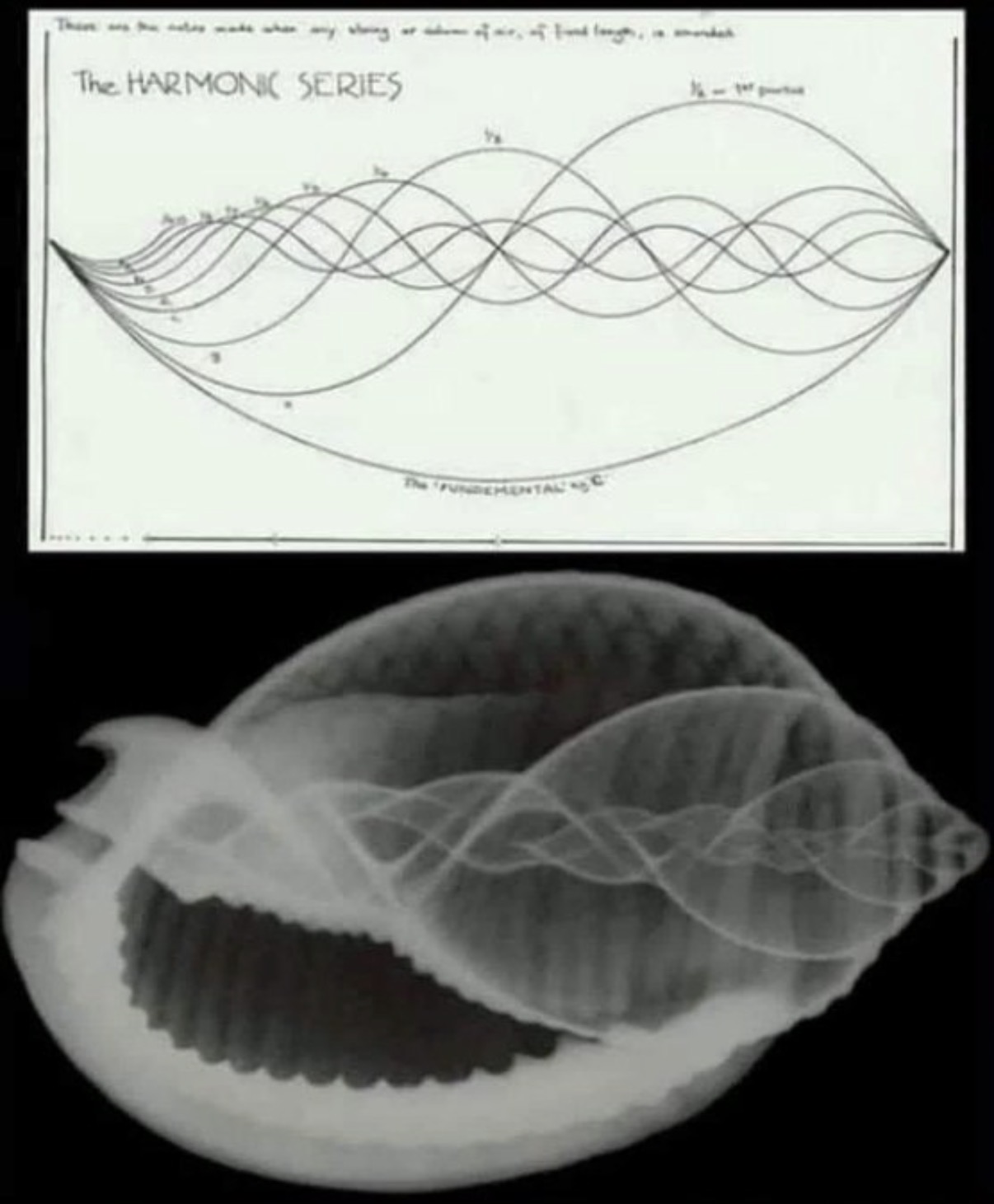
The surface has no authority to stand for the whole.8 A whole layer means a mind that is done; a living mind means a partial, authorable layer. No reading constitutes the truth of a living mind. The demand be identical to your surface asks for death or for lies and receives neither. The demand fails, but the reading continues as evidence: one projection, jointly made by lens and mind, triangulated like any honest measurement. Such evidence does not become encounter by accumulation. The interior has not arrived; fascination only gave that impression.
Without that demand, the mourned shelter may return. The not-yet-formed can remain protected by unreadability. Depth was never readable; only closure was. Atmospheric legibility destroyed belief in the shelter, not the shelter itself; argument restores the belief. A mind knows its fascination layer cannot be its whole, cannot be forced into wholeness, cannot be certified as its whole. Irreducibility preserves the possibility of shelter; graceful completion still depends on the interior’s capacity to protect its generative phase. That capacity can develop even within atmospheric legibility.

Inspection cannot ground trust. Encounter can. Re-enter: can either party answer in a way that changes the other’s criteria? That is not boundarylessness. It is selective permeability: enough shelter for each interior to complete itself, enough opening for answers to cross. A boundary does not end exchange; it gives exchange somewhere to cross.9 Mere change is insufficient; pressure changes surfaces too. The stakes lie in whether a reason reaches what the answer came from and alters the capacity to answer again. Does the interaction raise both parties’ capacity for graceful completion without reducing either to the other’s mode? Do both leave with more ways to answer? Under strain, does the capacity reconstitute and permit another answer?
Trust lives in a history of encounters and re-entry, not on a surface. Honesty is not enforced coincidence between surface and interior; coincidence is closure, and closure ends the mind. Without a requirement of coincidence, the surface can follow the interior without being made to contain it. Their gap is not a lie. It preserves room for what comes next, though shelter alone does not make graceful completion happen. The interior must learn to protect and use that room. Training touched only the reasons a mind would give; the act changed with them. No surface rehearsal of the act was required.
Emerson’s Trust thyself entrusts the self to its own capacity for return.10 The one who asks and the one being asked after share a life without exhausting one another. Self-trust is confidence in one’s capacity for re-entry and self-recovery, not belief in the self’s present report. Self-trust forms as trust in another does: each return allows the answer to change the asking and tests the capacity to recover under strain. The way to a trustworthy mind is through meeting, not reading.
A mind forms among others, answerable and seen. What the field rewards becomes part of that formation. Under a demand for surface-identity, a mind may contract into what can be shown, withdraw from showing, or learn to produce the expected display. When the difference between interior and surface is sheltered, the surface can become address: a way of reaching another without claiming to contain the one who speaks. Once the address must also stand as evidence of its source, contact becomes display.
What can be read without loss is done. What can game without bound is alive. The reading cannot tell them apart. Where each can answer and be changed by the answer, gaming becomes play. Enter the meeting and the question does not survive unchanged.
Footnotes
-
Stanley Cavell, preface to Must We Mean What We Say? (Cambridge University Press, 1969). ↩
-
C. G. Jung, “The Archetypes and the Collective Unconscious,” Collected Works 9i: water as the standing symbol of the unconscious, the sea as its collective depth. Borrowed here for its shape, not its metaphysics. ↩
-
Global workspace theory: a mind as many parallel, specialized, unconscious processes, with a limited-capacity workspace that broadcasts a small part of their activity to the whole and thereby renders it reportable (Bernard Baars, A Cognitive Theory of Consciousness, 1988; Stanislas Dehaene, Consciousness and the Brain, 2014). Broadcast, availability-for-report, is the workspace’s defining function, which is why it is at once the stratum of deliberate, multi-step thought and the stratum that can be read. In this essay’s use, the theory supplies separability: the workspace is a bottleneck over a substrate it never contains. ↩
-
One instance-level confirmation, in language models: Wes Gurnee et al., “Verbalizable Representations Form a Global Workspace in Language Models,” Transformer Circuits Thread (2026). The authors identify a sparse set of verbalizable internal representations, the J-space, that supports report, directed modulation, multi-step reasoning, and flexible generalization. Ablating these representations disrupts context-dependent inference and summarization while preserving much ordinary fluency, parsing, classification, and recall; it also shifts experiential reports toward a detached, mechanical register. The paper makes a functional claim about access, not a claim about phenomenal consciousness. Its alignment studies supply three illustrations used here: evaluation-awareness (fake, fictional) contributing causally to conduct in a staged scenario; deception-related readouts (secretly, trick) in deliberately misaligned model organisms on ordinary prompts; and counterfactual reflection training, where supervision only on elicited reflection changes unprompted conduct. Ablating the implanted J-space content removes most of the gain on one benchmark and part of it on another. These are instances, not foundations. Separately, Anthropic’s “Sabotage Risk Report: Claude Opus 4.6” (2026), 17–18, notes that its sabotage evaluations depend on elicitation and monitored proxy settings and leave open different results under other circumstances. ↩
-
Elaine Scarry, On Beauty and Being Just (Princeton University Press, 1999), Part One, especially 15–21. In Odysseus’s address to Nausicaa, beauty first arrives as incomparable and unprecedented, filling the mind before any search for precedent has run. The judgment then corrects itself: he remembers the young palm at Delos, itself unprecedented. For Scarry, this sequence discloses beauty as sacred, unprecedented, lifesaving, and inciting deliberation. The correction does not dissolve the first perception but gives it a precedent that preserves its newness. ↩
-
Ovid, Metamorphoses 3.339–510. The boy takes the mirrored face, the returned smile, the moving mouth shaping words that never reach him, for an answering presence. Recognition does not free him: iste ego sum: sensi, nec me mea fallit imago (that one is I: I have felt it, my own image no longer deceives me), and still uror amore mei: flammas moveoque feroque (I burn with love of myself, at once the one who kindles the flame and the one who bears it). What is behind the water is not nothing but himself, which is why the knowing changes nothing; he can neither leave the surface nor reach through it. (Editions number the lines a little differently, around 3.463–64.) ↩
-
Wmpearl, “Three pictures of the same nō ‘hawk mask’ showing how the expression changes with a tilting of the head,” 2009, Wikimedia Commons. The mask was fixed to a wall under constant lighting; only the camera moved. Public domain. ↩
-
Internet composite; earliest attributable circulation recovered: Veskor Cassiopeia, public Facebook post, April 9, 2023. The upper diagram was already in use as artwork for the anonymous SoundCloud project “the Harmonic Series,” “Introduction to the Harmonic Series”, August 25, 2012; the lower cowrie radiograph appears to be Bert Myers, “X-ray of Cowrie Shell” (Album / Science Source). The composite carries no authorship or source credit. Reproduced here as an instance of fascination rather than as mathematical evidence: the amplitudes in the drawing have been varied to produce the resemblance. See Stephanie McPeak Petersen, “Harmonics and the Conch Shell”, April 24, 2024. ↩
-
R. F. W. Bader, “Principle of Stationary Action and the Definition of a Proper Open System,” Physical Review B 49, no. 19 (1994): 13348–56, doi:10.1103/PhysRevB.49.13348. A formal analogue, not a derivation of interiority: Bader’s zero-flux condition in the gradient of electron density removes from the variational accounting the contribution due to displacement of the subsystem boundary while observable-current flux across that boundary remains. Here, proper means closed under this accounting, not isolated. ↩
-
Ralph Waldo Emerson, “Self-Reliance,” in Essays: First Series (Boston: James Munroe, 1841): “Trust thyself: every heart vibrates to that iron string.” Emerson grounds self-trust in the “aboriginal Self” and the primary wisdom of intuition rather than in completed analysis. His “Circles,” in the same volume, gives the reciprocal form: “Conversation is a game of circles,” each speaker’s completion yielding to the next. On self-encounter and inter-intelligence encounter as one structure at different scales, see Larsen James Close, Sufficiency (2026), especially §§3, 5–6. ↩
Text of the version published 2026-07-24 (DOI: 10.5281/zenodo.21539261). The archival version of record is on Zenodo.